
Farm & Ranch Construction in North Texas: What Property Owners Should Know Before Building
Anyone who decides to build on a farm and ranch in North Texas will soon learn that construction on a farm or ranch is not the same as the construction of a home or business. From the expansive clay soils to summer heat, seasonal storms and county permitting, a barn or arena constructed without local knowledge can have issues in only a few years.
There has been a pattern: The projects that take the longest to get built are the ones that are designed based on what goes on in North Texas, not based on some generic building template that's been applied elsewhere.
From site evaluation to material selection to the questions to ask any contractor bidding a ranch construction, farm construction or rural construction project in North Texas, this guide details what a property owner should know before taking the plunge into any project.
Why North Texas Land Demands a Different Approach
The soils and geology of north Texas is very diverse and significant to more than many first-time landowners realize. Expansive clay soils are found in parts of Parker and Palo Pinto counties, which swell when wet and shrink during droughts, causing slabs to crack and foundations to move that were not designed to accommodate such movement.
Other regions shift to a more rugged terrain, composed of caliche, with better drainage, but necessitating different excavation and footing methods. One of the most common issues that can result in structural issues early in the life of a rural construction foundation is having a contractor unaware of these shifts and applying the same foundation specification to all areas.
In addition to soil, weather is an added component to planning in this region. In the summer months, it is not unusual for temperatures to soar over 100 degrees for weeks on end, impacting concrete curing schedules, barn and shop ventilation requirements, etc.
Severe thunderstorm season occurs in the spring and early summer, and hail and straight-line wind occur with regularity such that most North Texas counties have building codes that reference wind speed design categories in the 90–115 mph range.
Key Considerations Before Breaking Ground
- Soil testing: A basic soil evaluation before foundation design prevents the majority of slab-cracking and settling issues seen on rural properties.
- Drainage planning: Ranch sites often sit on gentle slopes; grading and culvert placement determine whether a barn stays dry through spring runoff.
- Wind and hail rating: Metal roofing and siding gauge should match the local wind exposure category, not a national minimum.
- Utility access: Rural electric cooperatives and well/septic systems require earlier coordination than municipal utilities.
- County permitting: Requirements vary significantly between Parker, Palo Pinto, and Jack counties, and unincorporated land often has different rules than land inside city limits.
Comparing Common Ranch Construction Options
| Structure Type | Typical Use | Approx. Build Timeline |
|---|---|---|
| Pole barn / hay barn | Feed and equipment storage | 3–6 weeks |
| Metal shop building | Workshops, equipment bays | 6–10 weeks |
| Barndominium | Full-time or guest residence | 4–7 months |
| Ranch fencing (per mile) | Perimeter and cross-fencing | 1–3 weeks |
| Livestock arena | Training, roping, or show use | 8–14 weeks |
These timelines assume normal permitting and weather conditions; they can shift with custom design work, material availability, or an unusually wet season.
Materials That Perform in North Texas Conditions
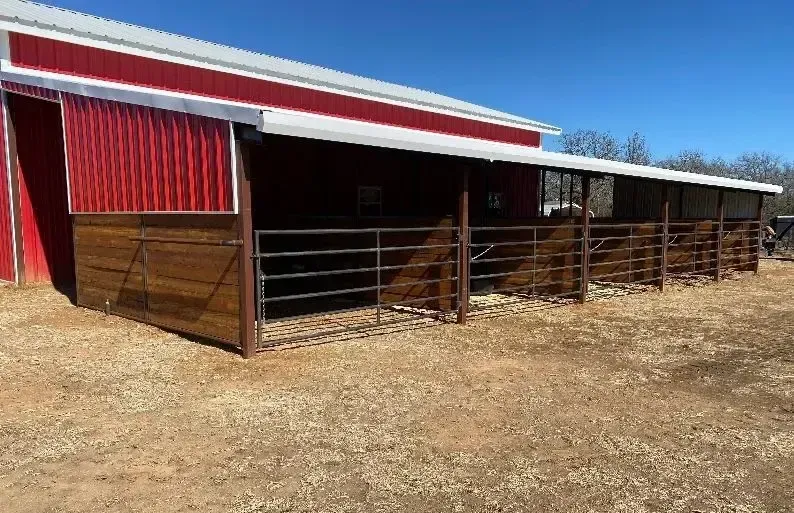
Galvanized and Galvalume coated steel are the most common materials employed in barns, shops, and barndominiums throughout the region because they resist rust, withstand hail better than the asphalt shingle alternatives, and provide significantly less maintenance requirements over the long term than wood siding that is exposed to sun and humidity fluctuations.
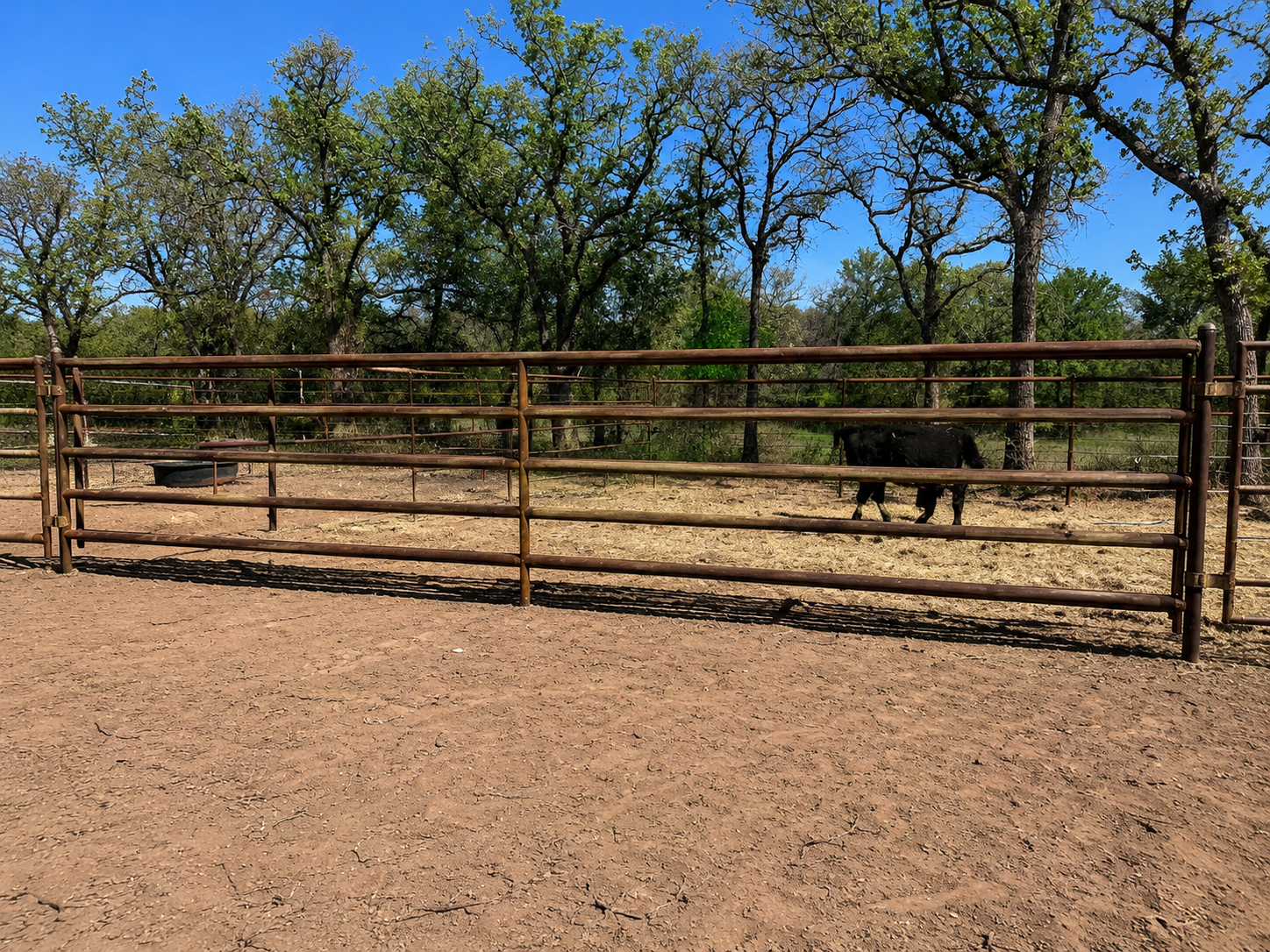
In areas of heavy livestock pressure, pipe/cable systems can last longer than wood and in smaller perimeter runs, treated wood is a viable option. The proper spacing of rebar in concrete foundations and the inclusion of control joints are superior methods to the shallow slab-on-grade construction without engineering input to deal with the expansion of clay soils.
Working With a Local Contractor
One of the main benefits of hiring a local builder is the familiarity with the inspectors, soil and suppliers. The local ranch construction, farm construction or rural construction contractor is familiar with which county offices need what documents, which subcontractors show up when they need them for rural jobs, and how design should be affected by local wind and drainage patterns before it ever arrives at a permit desk.
Working With a Local Contractor
One of the main benefits of hiring a local builder is the familiarity with the inspectors, soil and suppliers. The local ranch construction, farm construction or rural construction contractor is familiar with which county offices need what documents, which subcontractors show up when they need them for rural jobs, and how design should be affected by local wind and drainage patterns before it ever arrives at a permit desk.
Questions to Ask Before Signing a Contract
- Has the contractor built on similar soil conditions in this specific county before?
- What gauge steel and wind rating does the proposal specify, and does it match local code minimums?
- How is drainage addressed in the site plan?
- What is the payment and inspection schedule tied to?
- Are references available from other rural or agricultural clients in the area?
Property owners who take the time to vet these details before signing tend to avoid the costly surprises that come from generic, one-size-fits-all construction approaches.
Seasonal Timing for North Texas Builds
Timing a project around North Texas's weather patterns can meaningfully affect both cost and quality. Concrete work poured during peak summer heat requires additional curing precautions, and crews often work shortened hours to avoid the worst afternoon temperatures, which can extend timelines.
Scheduling foundation and framing work during the cooler months between late fall and early spring, when practical, tends to produce more consistent results and fewer weather-related delays, while also completing the structural shell before storm season peaks in April through June.
Seasonal Timing for North Texas Builds
- Skipping a soil evaluation to save a small upfront cost, then facing much larger foundation repairs later
- Choosing roofing or siding based on price alone without checking wind and impact ratings
- Underestimating site prep and utility costs when budgeting for a new structure
- Failing to confirm agricultural exemption status before assuming reduced permitting requirements
- Hiring a contractor with no verifiable experience in the specific county where the land is located.
Seasonal Timing for North Texas Builds
Farm construction or ranch is an investment of land that will probably be passed down to the next generation and beyond. The most important distinction between buildings that have to be constantly maintained and those that appreciate and perform for a generation is the selection of North Texas contractors who know the soil, storm exposure and county requirements of the area.
That local insight has also been incorporated into all of Lucky L Construction's barns, shops, fence lines, and
ranch property construction, so property owners should meet with us first for a site consultation before committing to a design.