
Equine Facility Planning in Mineral Wells: Barns, Stalls, Arenas and Property Layout
A well-planned horse property feels effortless to use. It takes only minutes to feed, it is safe to turn out, trailers can come and go without ever being noticed and the arena will be located where the footing remains good. Careful layout before any construction begins to get there.
When looking for an equine facility builder Mineral Wells TX horse owners can trust, first consider the way you and your horses use a facility throughout the day. This is the barn and stall building, arena and overall design for both horses and handlers.
Begin With a Daily Flow Map
Walk through a typical day on paper before selecting the building sizes. Where do horses lie, how do they feed, exercise and groom? From where does feed come in and where is it stored? How do you enter, turn and park in the trailer?
Create a horse trail for moving from the stall to willow to the arena. The shorter and safer those routes the less work each day will require and the less hazards you will create.
Planning the Barn
A well-built barn is the heart of any equine property. A knowledgeable custom horse barn builder Mineral Wells TX owners hire will help you think through several details:
- Stall size and count: Most horses need generous space to turn, lie down, and rest comfortably, and extra stalls leave room for guests or growth.
- Aisle width: Wide aisles let you lead, groom, and cross-tie horses safely and allow equipment to pass.
- Ventilation: Airflow protects respiratory health, so ridge vents, high windows, and open-top stall fronts all help.
- Flooring: Compacted base with rubber mats or other cushioned surfaces supports legs and simplifies cleaning.
- Tack and feed rooms: Secure, dry storage keeps equipment organized and feed protected from moisture and pests.
- Wash stall and lighting: Good drainage and bright, even lighting make daily care easier.
Steel framing is popular for barns because it resists pests and fire and gives you wide clear spans without interior posts.
Stalls, Paddocks, and Turnout
Nearer to the horse spaces, a stalling area with runs attached, will provide space for horses to move and allow for easier weather days. Fencing must be firm, conspicuous and not have sharp edges. It is often used with a pipe or a good quality wire system. Gates need special attention: use latches that horses cannot operate and wide enough gates for you, a wheelbarrow, and a tractor.
Cross fencing enables rotation to leave pastures to rest. Record water access in all turnouts and provide shade for horses to use in Texas summers.
Arena Basics
Arena design begins with how you ride. Barrel racers, ropers, trainers, and casual riders each need different dimensions and footing depths. Think about:
- Size and shape: Match the footprint to your discipline and number of riders.
- Footing: The right base and top layer cushions joints and holds consistent moisture.
- Drainage: A gentle crown or slope sends water away, and the surrounding ground should carry runoff off the property.
- Fencing and gates: Tight kick boards or rails and wide gates keep riders and equipment safe.
- Lighting and orientation: Position the arena so early and late sun is not directly in riders' eyes.
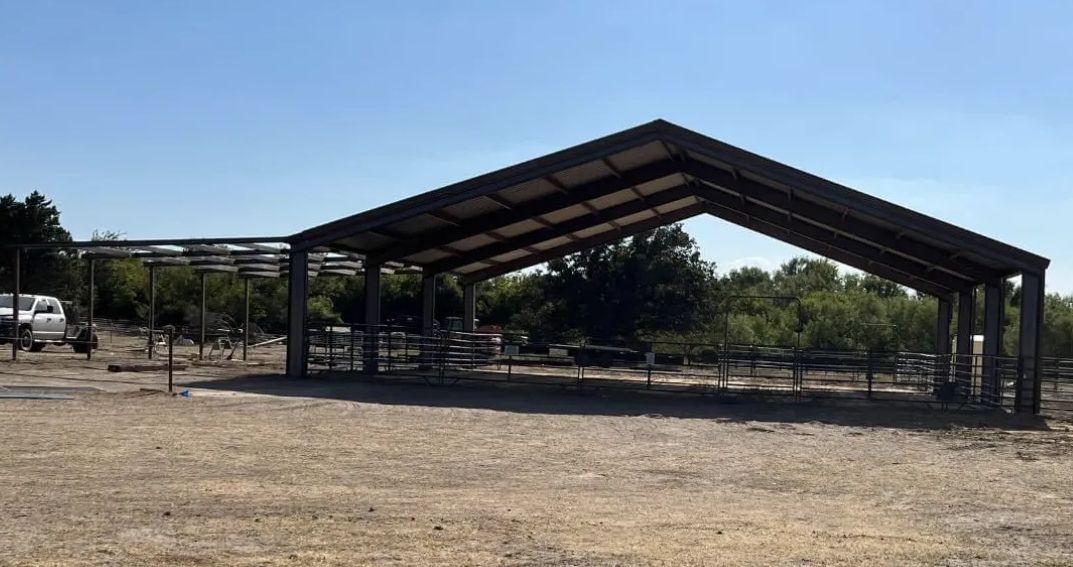
A covered riding arena Mineral Wells TX riders rely on to extend your training season, protects footing from heavy rain, and gives you shade through the hottest months. Outdoor arenas remain a strong choice for flexibility and cost, and many owners add a cover later.
Property Layout at a Glance
| Area | Planning Priority | Helpful Detail |
|---|---|---|
| Barn | Close to power, water, and the driveway | Leave room to expand with extra stalls |
| Arena | Level, well-drained ground | Keep it visible from the barn |
| Turnouts | Safe fencing and water access | Rotate pastures to protect grass |
| Trailer parking | Wide turning room | Gravel pad for all-weather use |
| Hay and feed storage | Dry, separate, and accessible | Place away from stalls for fire safety |
| Manure management | Convenient and downwind | Plan a path for loader or tractor access |
Site Work Comes Before Structures
Good facilities for horses are constructed on well-prepared land. Avoid having moist aisles in barns and inconsistent footing in arenas by ensuring the aisles are clear, graduated, and drained. Fully loaded trailers and hay trucks should be driven on roads and driveways during wet conditions. This work can be done in advance and can save costs and avoid remediation after the buildings have been built.
Frequently Asked Questions
1. How many stalls should I plan for?
Plan for the horses you own, any you expect to add, and a spare or two for guests or quarantine. Designing the barn to expand later is a smart safeguard.
2. What size arena do I need?
Arena size depends on your discipline and how many riders use it at once. Your builder can recommend dimensions based on how you train.
3. Is a covered arena worth it in Texas?
A cover provides shade and protects footing from rain, so you can ride in more conditions. Many owners find it adds meaningful comfort and consistency to training.
4. What type of fencing is best for horses?
Strong, visible fencing without sharp edges is ideal. Pipe fencing and quality wire systems with a top rail are popular because they hold up well and keep horses safe.
5. Should the barn or arena be built first?
Most owners build the barn first because horses need shelter and daily care, then add the arena. Planning both on one site layout keeps the order flexible.
Final Thoughts
A thoughtful equine property supports safe handling, easy chores, and long-lasting buildings. Plan the daily flow, prepare the land, and design each space around the horses and riders who will use it.
Whether you want a stall barn, turnout fencing, or a
covered riding arena, Mineral Wells TX horse owners can enjoy year-round, Lucky L Construction builds with ranch experience and careful layout. Call (682) 804-0327 to plan your equine facility.